
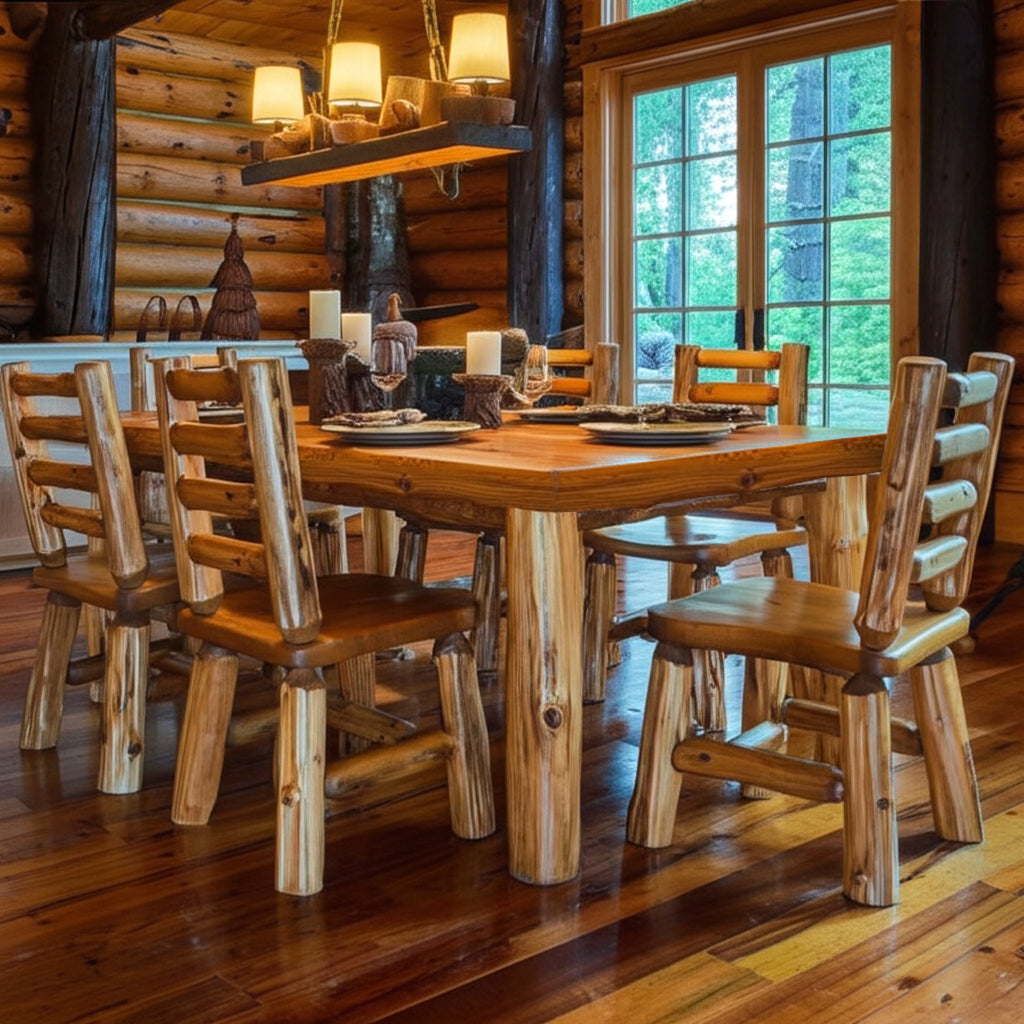
If you own log dining room furniture, you already know the magic it brings to a home. The rich wood grain, the solid weight of real timber under your hands, the way it turns an ordinary meal into something that feels a little more special. But natural wood is a living material — and living materials need care. Understanding the most common challenges and knowing how to handle them keeps your dining set looking beautiful for generations.
Why Log Dining Room Furniture Faces Unique Challenges
Every piece of log furniture starts as a tree. That means the wood retains characteristics that make it gorgeous — and characteristics that make it reactive to its environment. Temperature swings, humidity shifts, daily wear, and even sunlight all play a role in how your furniture ages.
The good news? None of these challenges are deal-breakers. With a little knowledge and some straightforward maintenance, your log dining table and chairs will remain the centerpiece of your home. Let's walk through the most common issues and exactly how to tackle each one.
Warping and Cracking in Log Dining Room Furniture
What Causes It
Wood naturally expands when it absorbs moisture and contracts when the air dries out. In a dining room, seasonal humidity changes — especially the shift from a humid summer to a dry, heated winter — put stress on the wood fibers. Over time, this repeated expansion and contraction can lead to warping, checking, or small cracks along the grain.
This is especially common in homes with forced-air heating systems that strip moisture from indoor air during colder months. The drier the environment, the more aggressively the wood contracts.
How to Fix and Prevent It
The single best thing you can do is stabilize your indoor humidity. Aim for a range between 35% and 55% relative humidity year-round. A quality humidifier during winter months makes a noticeable difference. If you already see minor cracks or checks, don't panic — small surface checks are normal in solid wood and often add character.
For deeper cracks, a wood filler that matches your furniture's tone can be carefully applied and sanded smooth. If warping has become severe enough to affect stability, it may be time to consult a furniture restoration professional. But in most cases, consistent humidity control prevents warping before it ever starts.
Scratches and Dents From Daily Use
What Causes Them
Your dining table sees action every single day. Kids doing homework, plates sliding across the surface, a misplaced set of keys, chairs being pulled in and pushed out — all of it takes a toll over time. Scratches and small dents are simply the evidence of a table that's being used the way it should be.
Simple Remedies That Work
For light surface scratches, a furniture touch-up marker or a walnut-rubbing trick works surprisingly well. Just rub the meat of a raw walnut along the scratch — the natural oils darken the exposed wood and help it blend in. For deeper scratches, fine-grit sandpaper (220-grit) followed by a fresh coat of finish restores the surface beautifully.
Dents in solid wood can sometimes be lifted with a damp cloth and a household iron. Place the damp cloth over the dent and press the iron on a medium setting for a few seconds. The steam causes the compressed wood fibers to swell back toward their original shape. This method works best on unfinished or lightly finished areas, so test in an inconspicuous spot first.
Prevention helps too. Use placemats, coasters, and felt pads on the bottoms of items you regularly set on the table. A solid log dining table built from real timber can handle decades of family meals — a little protection just keeps it looking its best while it does.
Finish Wear and Fading on Log Dining Room Furniture
What Causes It
Every protective finish breaks down eventually. Daily cleaning, the oils from your hands, spills, and UV exposure from nearby windows all gradually wear away the sealant that protects the wood underneath. You'll notice it first in high-contact areas — the center of the table where plates are placed, the edges where arms rest, or the chair backs where hands grip.
Once the finish thins out, the bare wood becomes vulnerable to stains, moisture rings, and accelerated wear. Sunlight compounds the issue by causing the wood's natural color to lighten or shift unevenly.
How to Restore and Protect the Finish
Light finish wear can be addressed with a quality furniture wax or oil designed for the type of finish on your piece. Apply it with a soft cloth, working in the direction of the grain, and buff to a gentle sheen. This restores luster and adds a fresh protective layer without the hassle of a full refinish.
For furniture where the finish has worn through to bare wood in spots, a more thorough approach works best. Lightly sand the affected area with 220-grit sandpaper, clean away the dust, and apply a fresh coat of polyurethane, lacquer, or the original finish type. Multiple thin coats with light sanding between them produce the most durable result.
To slow fading from sunlight, position your dining set away from direct window exposure when possible, or use curtains and UV-filtering window film. Rotating your table periodically — even just a quarter turn every few months — helps the surface age evenly instead of developing lighter patches on one side.
Moisture Damage and Water Rings
What Causes Them
A sweating glass left on the table for twenty minutes. A spill that wasn't wiped up right away. A vase with condensation on the bottom. Water is the quiet enemy of wood furniture, and dining tables encounter it constantly. White rings indicate moisture trapped in the finish, while dark rings mean the water has penetrated through to the wood itself.
How to Handle It
White water rings are the easier fix. A paste of baking soda and non-gel toothpaste applied gently with a soft cloth often lifts the mark. Work in the direction of the grain, then wipe clean and apply furniture polish. For stubborn white rings, a cloth dampened with a small amount of mineral spirits can do the trick.
Dark rings require more effort — you'll need to sand down to the stained wood, possibly apply a wood bleach to even the tone, and then refinish the area. The best strategy is prevention: always use coasters and trivets, and wipe up spills immediately.
Why Quality Construction Makes All the Difference
Here's the thing most people don't realize — the majority of these issues are far less severe when your furniture is built from quality wood with proper construction techniques. Lakeland Mills builds their dining furniture from Northern White Cedar that is hand-peeled, preserving the wood's natural protective oils and integrity. That hand-peeled character isn't just beautiful; it means the wood retains more of its natural resilience.
Solid log construction also means no veneers to peel, no particle board to crumble, and no hollow cores to collapse. When you invest in a piece like a handcrafted cedar log bench or a sturdy log dining table, you're starting with a foundation that's built to last — and that makes every maintenance task simpler and less frequent.
A Quick Maintenance Schedule to Keep Everything Looking Great
You don't need to spend hours maintaining your log dining furniture. A simple routine does the job:
Weekly: Dust with a soft, dry cloth. Wipe up any spills immediately with a slightly damp cloth, then dry the surface.
Monthly: Apply furniture polish or conditioning oil to maintain the finish's protective layer. Check for any new scratches that could be touched up quickly.
Seasonally: Inspect the overall condition of the finish, especially as seasons change and indoor humidity shifts. Adjust your humidifier settings if needed. Rotate the table if one side gets more sun.
Annually: Do a thorough inspection. Address any deeper scratches, reapply finish to worn areas, and tighten any hardware on chairs or table bases.
Your Log Dining Furniture Deserves the Best Care
Log dining room furniture is one of those rare things that actually gets better with age — as long as you give it a little attention along the way. The patina that develops over years of family dinners, holiday gatherings, and everyday meals tells your family's story in a way no mass-produced table ever could.
Every scratch has a memory behind it. Every subtle shift in the wood's color marks another season in your home. With the straightforward care tips above, you can make sure those stories keep building for decades to come.
Ready to find a dining set that's built to become a family heirloom? Browse the full Lakeland Mills collection and discover solid cedar furniture crafted to stand up to real life — beautifully.

Leave a comment
This site is protected by hCaptcha and the hCaptcha Privacy Policy and Terms of Service apply.