
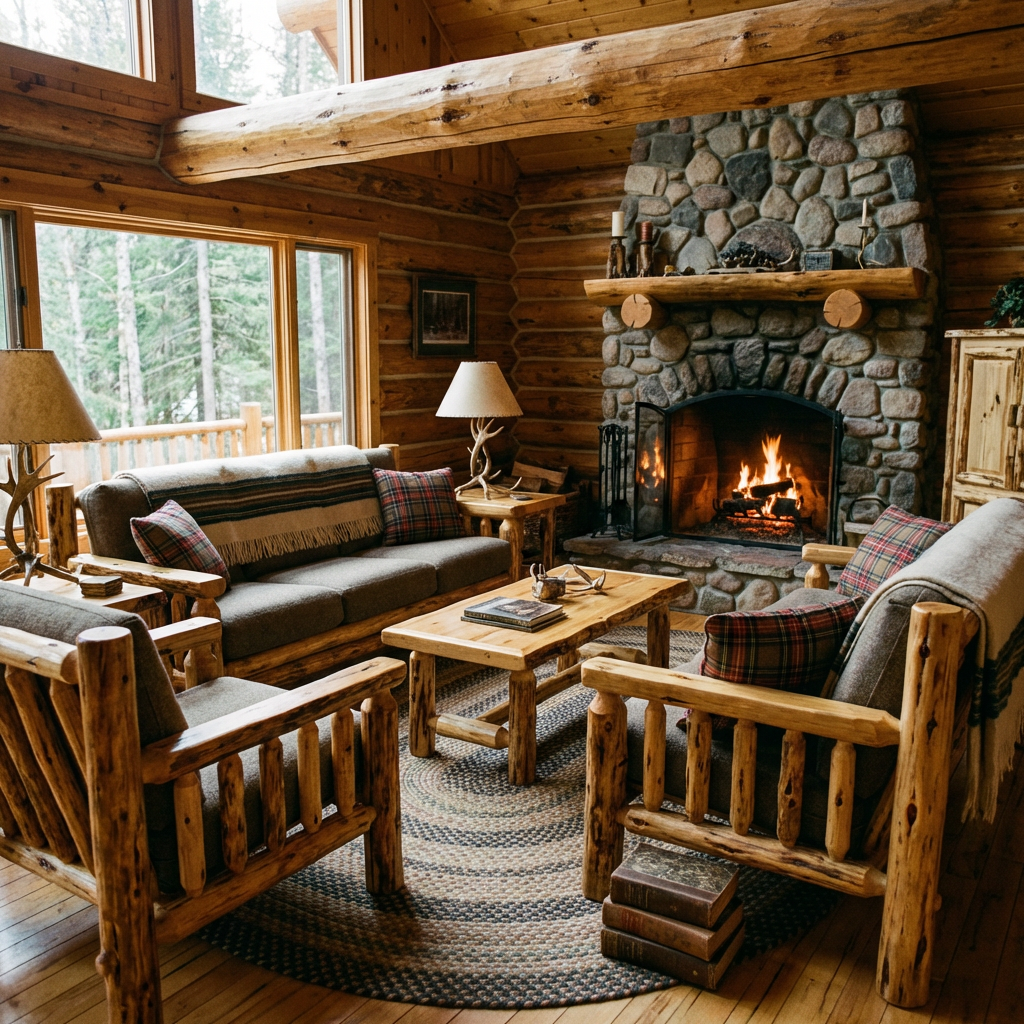
Buying log furniture isn't like picking out something at a big-box store. The wood is real. The character is one-of-a-kind. And the difference between a piece that lasts three generations and one that falls apart in three years? It's massive. This log furniture buying guide walks you through everything we've learned since 1923 — from wood species to joinery to delivery — so you can spend your money wisely and love what you bring home.
Why Log Furniture Deserves a Closer Look
There's a reason people keep coming back to log furniture. Every single piece carries its own fingerprint — unique grain patterns, knot placement, and color variations that come from real trees, not a factory mold. You simply can't replicate that with pressed particleboard and a printed veneer.
But it's not just about looks. Quality log furniture is built with solid wood construction that actually gets stronger and more beautiful over time. A well-made cedar bed frame or dining chair will outlast just about anything coming off a modern assembly line.
And log furniture isn't limited to rustic cabins anymore. It fits farmhouse kitchens, modern-rustic living rooms, covered porches, and sprawling backyards. Wherever your family gathers, there's a place for it.
Understanding Wood Types for Log Furniture
The wood species you choose determines how your furniture looks, how it performs, and how long it lasts. Not all wood is created equal, and picking the right one for your situation is the single most important decision in this whole process.
Northern White Cedar — The Best All-Around Choice
Northern White Cedar is our wood of choice at Lakeland Mills, and it has been for a century. Here's why: it's naturally resistant to insects, rot, and decay — no chemical treatment needed. It's lightweight, so you can actually rearrange your patio furniture without throwing out your back. It stays cool to the touch in direct sunlight, which matters more than you'd think on a hot July afternoon.
Cedar carries a warm, creamy color with subtle grain patterns and a clean, pleasant aroma. Left unfinished outdoors, it ages into a gorgeous silver-grey patina that people pay good money trying to fake with paint. If you want furniture that handles both indoor comfort and outdoor exposure without babysitting, cedar is your answer.
Our 4-foot log picnic table is a perfect example of what cedar can do — solid, beautiful, and built to handle years of family cookouts without flinching.
Pine — The Classic Cabin Wood
Pine is the traditional choice for cabin furniture, and for good reason. It's affordable, widely available, and takes stain beautifully — giving you more color options than most other species. Those prominent knots and warm golden tones? That's the classic rustic look people picture when they think "log furniture."
The trade-off is softness. Pine dents and scratches more easily than cedar or hickory, and it's best suited for indoor use. If you want pine outdoors, plan on pressure treatment or a regular sealing schedule to keep moisture and insects at bay.
Hickory — The Heavyweight
Hickory is the strongest North American hardwood commonly used in furniture. It's extremely hard, dense, and durable, with a dramatic color contrast between light sapwood and dark heartwood that gives every piece a striking, high-contrast character.
Hickory furniture is heavy — there's no getting around that. But if you want a piece that can take serious daily punishment (think: active households with kids, dogs, and boots), hickory delivers. It comes at a premium price, but you're paying for wood that simply refuses to quit.
Joinery: The Hidden Test of Quality
Here's where a lot of buyers get burned. Two pieces of log furniture can look nearly identical on the outside and be worlds apart on the inside. The difference is joinery — how the wood is actually connected.
Mortise-and-Tenon: The Gold Standard
Mortise-and-tenon joints have been used for thousands of years because they work. One piece of wood (the tenon) fits snugly into a hole carved into another piece (the mortise). When done properly, this creates a joint that's incredibly strong and actually tightens over time as the wood settles.
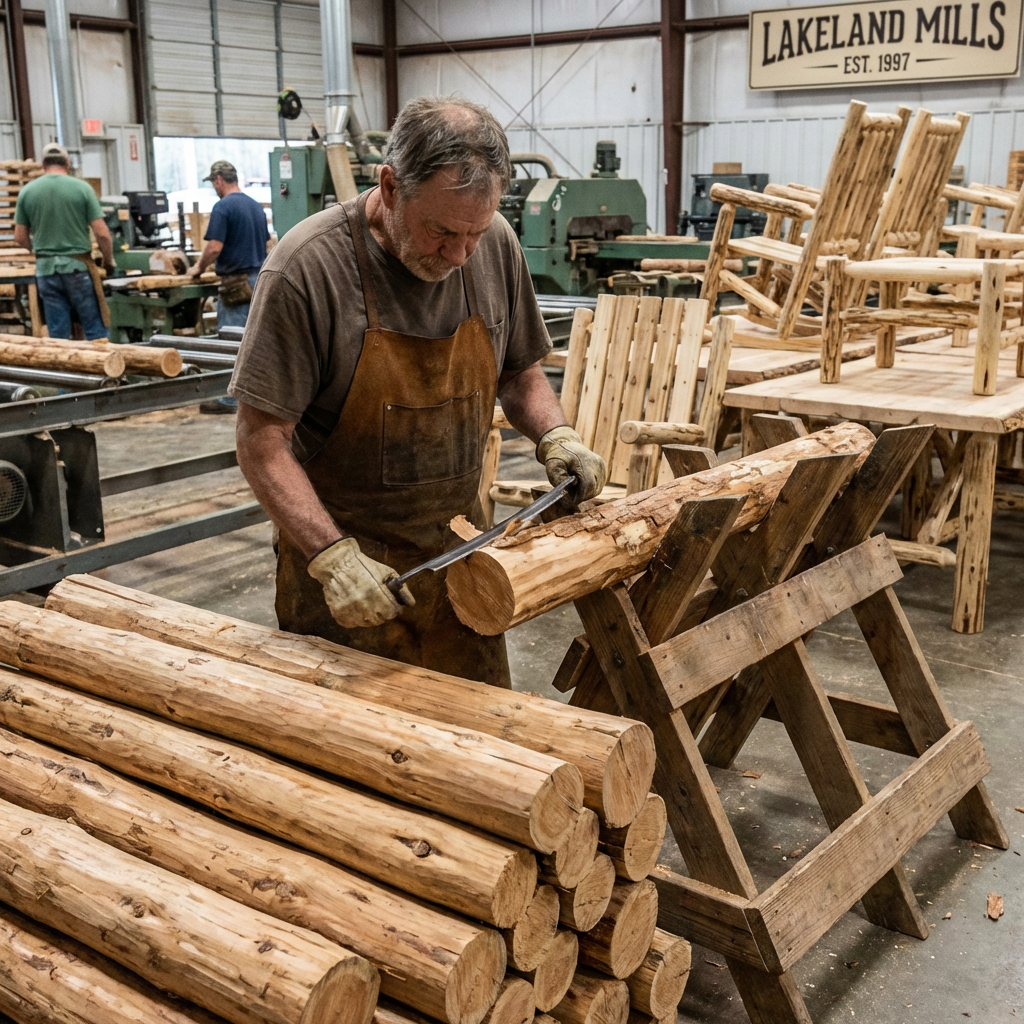
This is the method we use at Lakeland Mills. Every joint is fitted by hand. It takes longer, costs more, and it's worth every penny.
What to Avoid
Beware of furniture held together primarily with screws, nails, or staples driven into end grain. These fasteners lose grip over time, especially in solid wood that expands and contracts with the seasons. Dowel joints are acceptable as secondary reinforcement but shouldn't be the primary structural connection on load-bearing pieces.
If a manufacturer won't tell you how their furniture is joined, that's a red flag.
Why Proper Wood Drying Matters More Than You Think
Green wood — freshly cut, still full of moisture — will shrink, crack, and warp as it dries. This is physics, not a defect. The question is whether the drying happens before your furniture is built or after it's sitting in your living room.
Properly dried wood (either air-dried or kiln-dried to the right moisture content) is dimensionally stable. Joints stay tight. Surfaces stay flat. Finishes adhere properly. Always ask about moisture content before you buy.
At Lakeland Mills, our Northern White Cedar is carefully dried before construction. It's one of those invisible steps that makes a visible difference for years to come.
Indoor vs. Outdoor Log Furniture: Know the Difference
Not all log furniture is designed to live outside, and putting the wrong piece on your patio is an expensive mistake.
Outdoor Furniture Needs
For outdoor use, you want wood with natural weather resistance — Northern White Cedar leads the pack here. You also want construction designed to shed water rather than trap it. Joints should allow for seasonal wood movement without loosening.
Something like our 5-foot picnic table with attached benches is engineered specifically for outdoor life. Solid cedar construction, smart design, and zero chemical treatments needed.
Indoor Furniture Considerations
Indoor pieces have different demands. Humidity control matters — excessively dry heated air in winter can cause cracking in poorly dried wood. Finished indoor pieces benefit from occasional conditioning. The good news? Indoor log furniture tends to last even longer because it's protected from the elements.
What Should Log Furniture Cost?
Let's talk real numbers. Quality handmade log furniture typically falls in these ranges:
Chairs and small accent pieces: $200–$800
Dining tables and bed frames: $500–$2,000
Large sets and specialty pieces: $1,500–$3,000+
If you're seeing prices dramatically below these ranges, ask hard questions about wood species, joinery methods, and where the furniture is actually made. Cheap log furniture almost always means green wood, weak joints, or imported construction — and you'll pay for it later in repairs or replacement.
Think of quality log furniture as an investment. A well-built cedar table will still be gathering your family together when the particleboard one from the discount store is long gone.
What to Look for Before You Buy
Before you pull the trigger on any piece of log furniture, run through this checklist:
Wood species: Is it clearly identified? Does it match your indoor/outdoor needs?
Joinery: Mortise-and-tenon? Or screws and staples?
Drying method: Has the wood been properly dried before construction?
Finish: Is it unfinished, sealed, or stained? Does the finish suit your intended use?
Warranty: Does the manufacturer stand behind their work? A real warranty signals real confidence.
Origin: Where is it actually made? Handcrafted domestically, or mass-produced overseas?
Delivery and Assembly: The Final Details
Log furniture is heavy. Solid wood doesn't fold flat into a box like flat-pack furniture, and shipping costs reflect that. Here are a few things to keep in mind:
Many quality log furniture pieces ship fully assembled or in large sub-assemblies. This means fewer wobbly joints from DIY assembly, but it also means you need to plan for how the piece gets into your home. Measure your doorways. Seriously.
For oversized pieces, some manufacturers offer white-glove delivery. For standard residential shipping, expect curbside or threshold delivery. Always inspect your furniture upon arrival and report any shipping damage immediately.
Ready to Find Your Piece?
The best log furniture is simple, honest, and built to last — just like the trees it comes from. Whether you're furnishing a cabin, outfitting your backyard for summer, or adding warmth to your dining room, the right piece of solid wood furniture changes a space.
We've been handcrafting Northern White Cedar furniture in Michigan for over 100 years. Every joint is fitted by hand. Every piece is built to be part of your family's story.
Browse our full collection — from our popular ADA-accessible picnic tables to dining sets and beyond — and find the log furniture your family will gather around for generations.

Leave a comment
This site is protected by hCaptcha and the hCaptcha Privacy Policy and Terms of Service apply.