
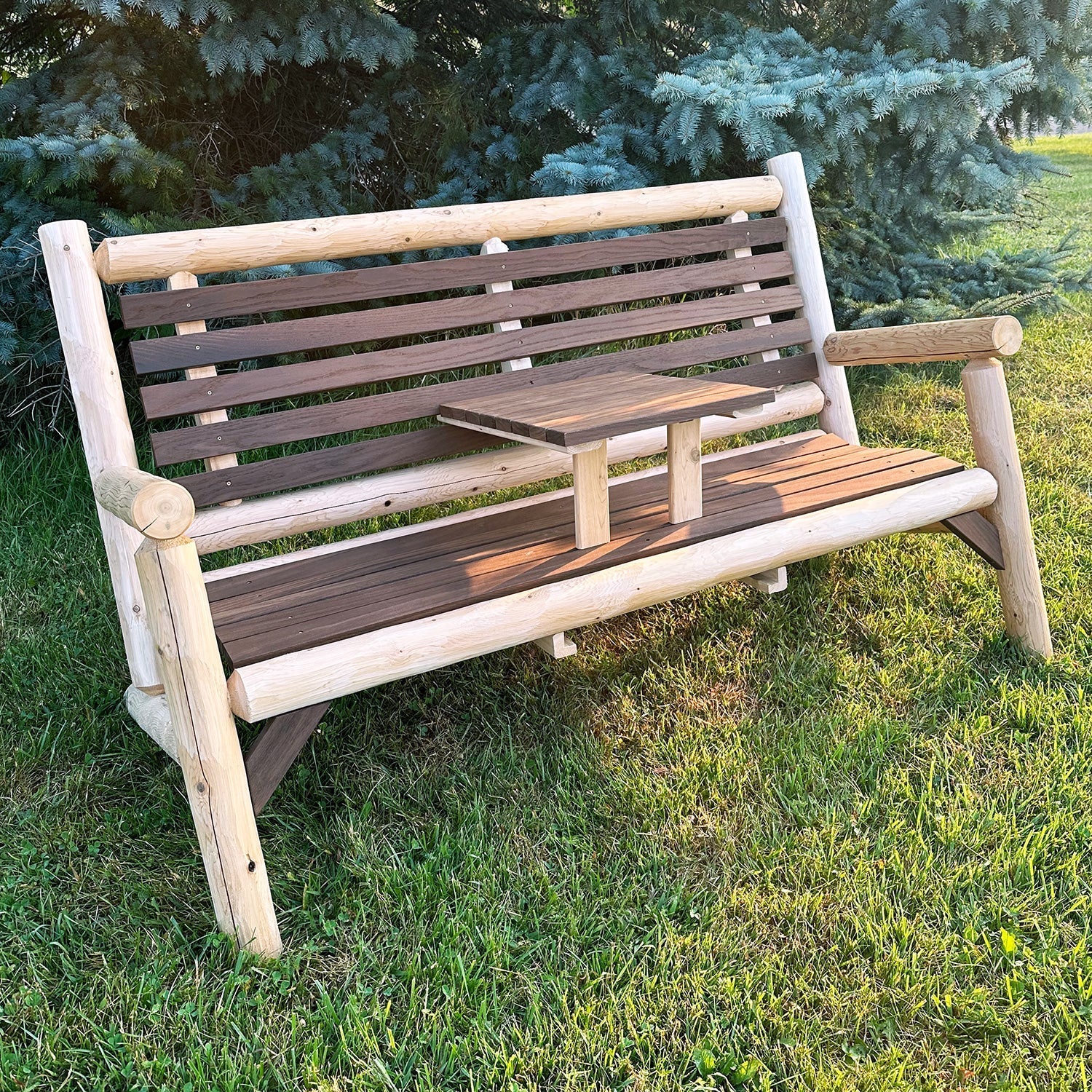
Your outdoor log furniture lives a tough life. Blistering summer heat. Freezing winter nights. Sideways rain in April and relentless humidity in August. When you invest in pieces your family will gather around for years, you need them to stand up to all of it — without splitting, warping, or rotting away.
That's exactly why the best outdoor wood furniture pairs smart material choices with proven science. At Lakeland Mills, we build our outdoor pieces from Northern White Cedar — a wood species with natural weather-fighting properties — and we're always exploring advanced techniques like thermal modification that push outdoor performance even further. Let's break down why these approaches matter every single time your family sits down outside.
Why Material Choice Is Everything for Outdoor Furniture
Not all wood is created equal when it comes to weather. Some species absorb moisture like a sponge. Others resist it naturally. Some warp at the first hard freeze. Others stay stable through decades of seasonal swings.
The difference comes down to what's happening inside the wood at a cellular level — the natural oils, the density of the grain, and the chemical compounds the tree produces to protect itself. When you understand what makes certain woods naturally resilient, you start to see why a solid cedar garden swing can outlast a pine one by years, even sitting in the same backyard.
Northern White Cedar: Nature's Weather-Resistant Wood
Every piece of Lakeland Mills outdoor furniture starts with Northern White Cedar (Thuja occidentalis), and there's a very good reason for that. This species has been trusted for centuries in demanding outdoor applications — from canoes and fence posts to log cabins and dock pilings.
Natural Protective Compounds
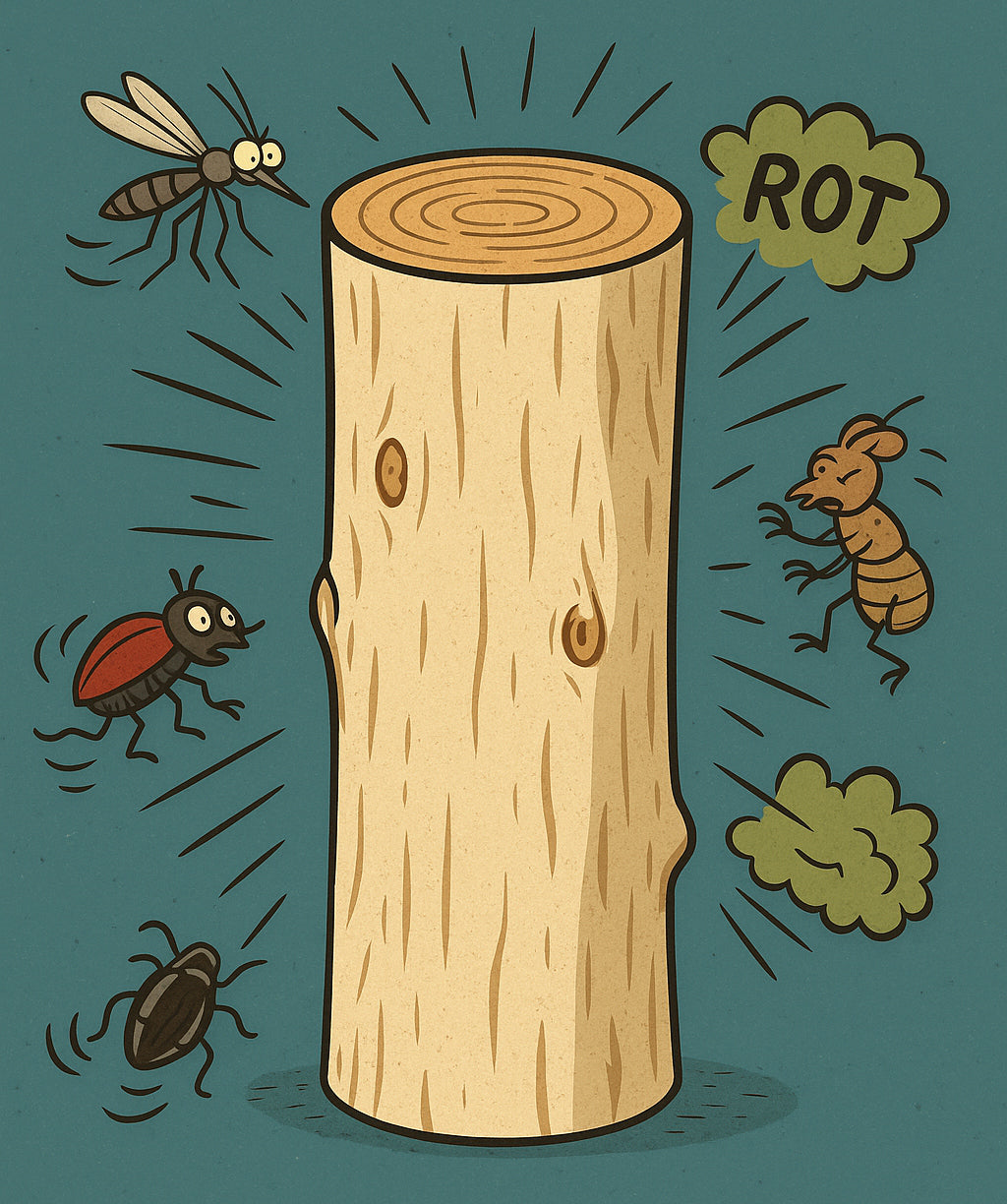
Northern White Cedar produces a range of naturally occurring chemical compounds — including thujone and other tropolone-related extractives — that give the wood impressive resistance to decay, insects, and fungal growth. These aren't coatings applied after the fact. They're built into the heartwood itself, produced by the living tree over decades of growth.
This means your outdoor cedar furniture starts with a built-in defense system before any finish is ever applied.
Lightweight but Remarkably Stable
Cedar is also dimensionally stable, meaning it resists the swelling-and-shrinking cycle that destroys other outdoor woods over time. It's lighter than most hardwoods, which makes it practical for pieces you might rearrange seasonally — like a 4-foot log picnic table on your patio. But don't let the lighter weight fool you. Cedar is tough where it counts.
The Science of Thermally Modified Wood
Beyond choosing the right species, one of the most exciting advances in outdoor wood technology is thermal modification. This process is gaining popularity across the furniture and construction industries, and for good reason — it dramatically improves how wood performs in the elements.
How Thermal Modification Works
During thermal modification, wood is heated to very high temperatures (typically between 400°F and 500°F) in a carefully controlled, oxygen-free environment. No flames. No chemicals. Just intense, sustained heat that permanently alters the wood's cellular structure.
The process breaks down hemicellulose — the component of wood cells most responsible for absorbing and holding moisture. The result is wood that absorbs significantly less water than its untreated counterpart. Industry research generally shows that thermally modified wood can absorb substantially less moisture than conventional wood, though exact figures vary depending on species, process, and testing conditions.
What That Means for Your Outdoor Furniture
Less moisture absorption translates directly to better outdoor performance:
- Less warping and cupping. When wood absorbs less water, it swells less. When it swells less, it stays flat and true.
- Less cracking and splitting. The repeated cycle of wet-dry, hot-cold is what causes wood to crack over time. Reduce moisture uptake, and you dramatically slow that process.
- Greater resistance to rot and decay. Fungi and mold need moisture to thrive. Wood that stays drier gives them far less to work with.
- No chemical treatments needed. Because the protection comes from the modified wood structure itself, there are no chemical preservatives leaching into your yard where your kids and pets play.
Why Lakeland Mills Trusts Cedar for Outdoor Living
We've been building log furniture from Northern White Cedar for decades because we've seen firsthand how it performs. Families tell us about picnic tables that have been hosting Sunday dinners for fifteen years. Porch swings that watched kids grow up. Benches that weathered a thousand storms and still feel solid underfoot.
That kind of longevity doesn't come from gimmicks. It comes from starting with the right wood, building with real joinery and solid construction, and respecting the fact that outdoor furniture has to earn its place in your yard every single season.
Whether you're furnishing a lakeside cabin or creating a backyard gathering spot, a piece like our 6-foot ADA-accessible log picnic table is built to welcome everyone to the table — and keep welcoming them for years to come.
Caring for Your Outdoor Cedar Furniture
Even with cedar's natural advantages, a little care goes a long way toward maximizing the life of your outdoor pieces.
Seasonal Basics
Give your furniture a good cleaning each spring with mild soap and water. A soft-bristle brush works well for getting into the textured surfaces of log-style pieces. Rinse thoroughly and let everything dry completely in the sun.
Finish Options
You can leave Northern White Cedar unfinished and let it develop a beautiful silver-gray patina over time — many cabin owners love this look. Or, apply a quality exterior wood sealant or UV-protective finish once a year to maintain the original honey-gold color. Either approach works. It's really about the look you prefer.
Winter Storage Tips
If you live in a region with harsh winters, consider covering your furniture or moving smaller pieces like a yard swing under a covered porch during the worst months. Cedar handles winter well, but reducing direct exposure to standing snow and ice extends its life even further.
The Bottom Line: Real Wood, Real Performance
When it comes to outdoor furniture that lasts, there's no substitute for starting with the right materials and building things properly. Northern White Cedar brings natural decay resistance, dimensional stability, and a warmth that no synthetic material can replicate. Advanced techniques like thermal modification push those boundaries even further — offering a chemical-free path to truly weatherproof outdoor wood.
At Lakeland Mills, we build every piece with the belief that your family deserves furniture that's as honest and enduring as the time you spend together outside. Browse our full collection of outdoor log picnic tables, swings, and seating to find the pieces that belong in your backyard.


Leave a comment
This site is protected by hCaptcha and the hCaptcha Privacy Policy and Terms of Service apply.