
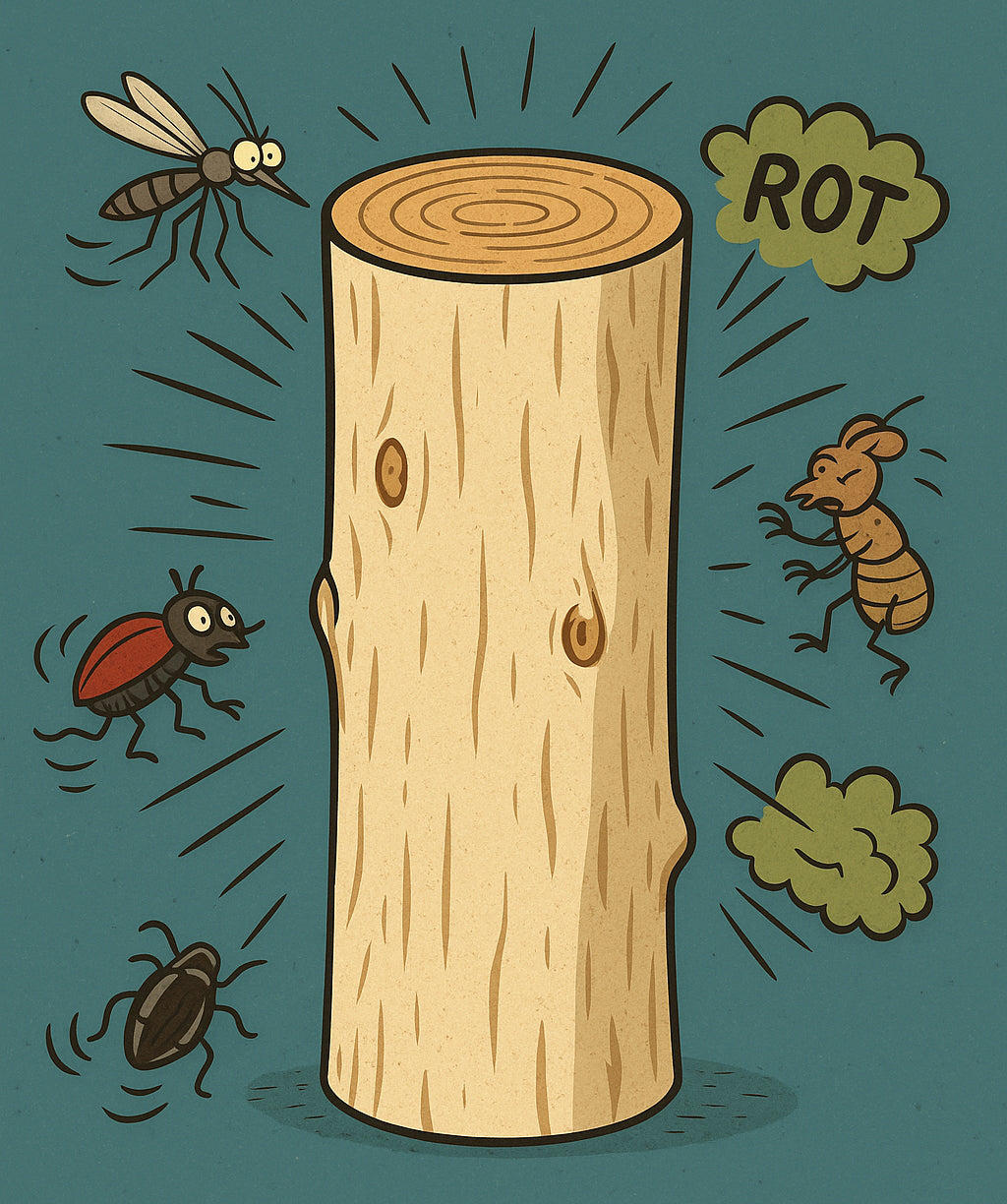
If you're shopping for outdoor furniture that can actually handle the outdoors, you need to know about cedar. Specifically, Northern White Cedar — the wood we use to build much of our collection here at Lakeland Mills. This remarkable species comes equipped with its own natural defenses against rot, decay, and insects. No chemical treatments required. No gimmicks. Just millions of years of evolution working in your favor.
But how does cedar resist rot and insects so effectively? And what makes Northern White Cedar such a standout choice for log furniture that lives on your patio, your deck, or out in the yard year-round? Let's break it down.
Why Cedar Resists Rot: Nature's Own Preservative System
The secret lives in the heartwood — the dense inner core of the cedar tree. As cedar grows, it produces a group of organic compounds called thujaplicins, along with other natural extractives. These compounds are powerful fungicides. They're baked right into the wood fibers, and they make cedar genuinely hostile territory for the organisms that cause rot.
Here's what's happening at the cellular level:
Built-In Fungicidal Properties
Rot is caused by fungi. When fungal spores land on cedar and try to colonize the wood, thujaplicins interfere with their ability to grow and break down wood fibers. Think of it as a natural immune system — one that's active from the moment the tree is harvested and milled into your furniture.
Cedar Naturally Repels Moisture
Rot-causing fungi need moisture to survive. Northern White Cedar has a naturally low density and a cellular structure that resists absorbing and holding water. Less moisture means less rot. It's that simple. This is one reason our cedar log furniture routinely lasts 15 years or more outdoors — even unfinished — in Michigan's punishing freeze-thaw cycles.
Dimensional Stability That Prevents Decay
Because cedar doesn't soak up water the way pine or spruce does, it's far less likely to swell, shrink, warp, or crack when the weather shifts. That matters more than you'd think. Cracks and splits in lesser woods create entry points for moisture and decay. Cedar stays tight, stays stable, and stays intact season after season.
Picture a picnic table sitting in your backyard through summer thunderstorms, fall rain, and heavy spring snowmelt. With Northern White Cedar construction, that table isn't just surviving — it's holding strong.
How Cedar Repels Insects Without Chemicals
Rot isn't the only threat to outdoor furniture. Insects — ants, beetles, moths, and more — can quietly destroy wood from the inside out. Cedar fights back here, too, and it does it the same way: with chemistry that's built right in.
Cedar's Aromatic Oils Are a Natural Insect Repellent
That distinctive cedar scent you love? Insects hate it. The aroma comes from volatile oils containing compounds like cedrol and thujone. To humans, it smells like a cabin in the woods. To ants, carpet beetles, moths, and even mosquitoes, it's deeply unpleasant and disorienting.
This is the same principle behind cedar closets and cedar chests — people have been using cedar to protect their belongings from insects for centuries. When your outdoor furniture is made from the same wood, you're getting that protection built into every log.
Pheromone Disruption Keeps Pests Away
Cedar's aromatic compounds don't just smell bad to insects. They actually interfere with the chemical signals insects use to communicate, navigate, and reproduce. Pheromone disruption makes it harder for pests to find and colonize the wood. They don't just dislike cedar — they can't function properly around it.
A Physical Barrier, Too
Cedar's tight grain and natural oils also create a physical barrier. The wood is less porous than many softwoods, which means boring insects have a tougher time getting established. Combined with the chemical defenses, it's a one-two punch that keeps your furniture pest-free without a single spray or treatment.
Does Cedar Ever Rot or Get Bugs?
Let's be honest — no wood is completely invincible. If cedar sits in direct contact with wet soil for years with zero ventilation, it will eventually break down. Every material has its limits.
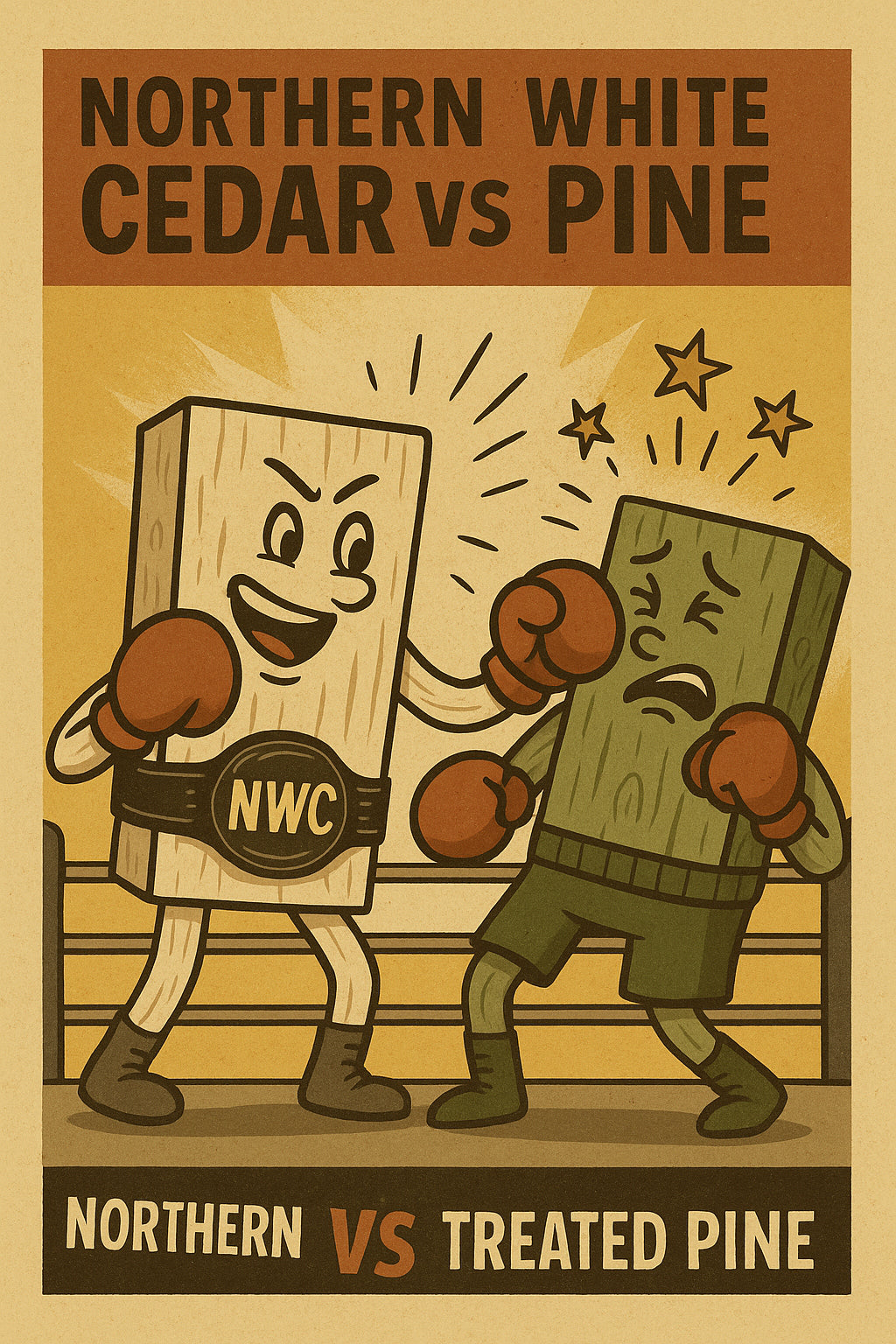
But here's the thing: cedar's natural defenses slow decay dramatically compared to other species. Where untreated pine might show serious rot in two or three years outdoors, Northern White Cedar can go well over a decade looking and performing beautifully. With basic care — keeping furniture off bare ground, allowing airflow, and occasionally applying a sealant if you want extra protection — cedar log furniture can last a generation.
That's not marketing talk. That's what we've seen firsthand from families who bought Lakeland Mills furniture years ago and still use it every weekend.
Why Northern White Cedar Is Our Wood of Choice
We could build furniture from cheaper, faster-growing species. Plenty of companies do. But we chose Northern White Cedar for our outdoor line because it delivers something those alternatives can't: real, lasting performance without relying on chemical pressure treatments.
Northern White Cedar is:
- Naturally rot-resistant — no chemical preservatives needed
- Naturally insect-repellent — built-in protection from day one
- Lightweight yet strong — easy to move, tough enough to last
- Dimensionally stable — won't warp, twist, or split like other softwoods
- Beautiful — warm, honey-toned grain that ages to a graceful silver patina
Whether you're looking for a cedar log rocking chair for your front porch or a picnic table for family cookouts, the cedar does the heavy lifting so you can just enjoy your time outdoors.
Cedar Log Furniture Built to Outlast the Elements
When you invest in outdoor furniture, you're investing in years of family dinners, lazy Sunday mornings, and evenings spent watching the sun go down. That furniture should be up to the task. Northern White Cedar — with its natural resistance to rot, decay, and insects — is one of the few materials that genuinely is.
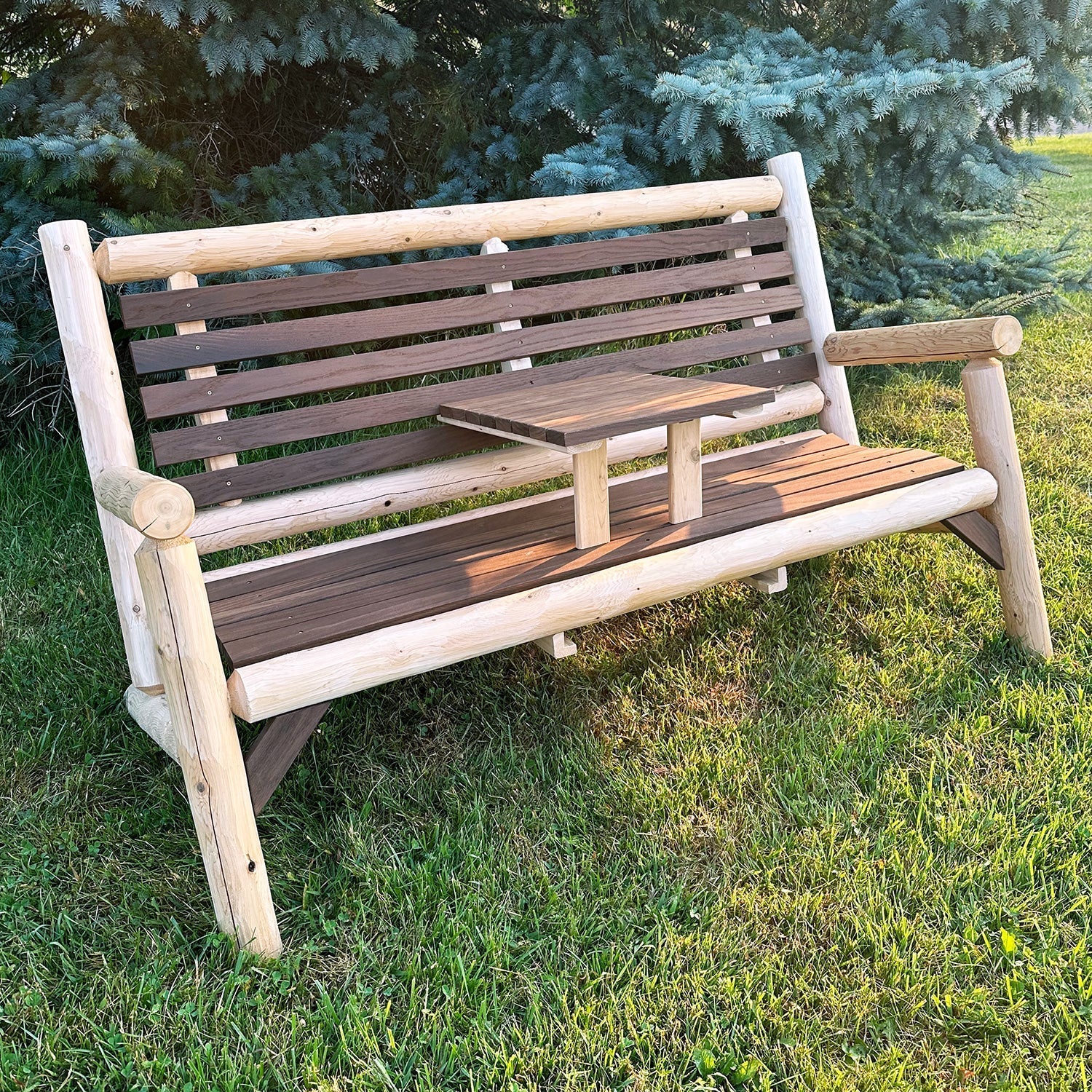
At Lakeland Mills, we pair that incredible wood with real craftsmanship. Solid log construction. Mortise-and-tenon joinery. Furniture built to be used hard and loved for a long time. Every piece ships ready to assemble, and every piece is made right here in the USA.
Ready to bring home furniture that's naturally built to last? Browse our full collection of outdoor cedar log picnic tables, rocking chairs, porch swings, and more. Your backyard deserves the real thing.

Leave a comment
This site is protected by hCaptcha and the hCaptcha Privacy Policy and Terms of Service apply.