
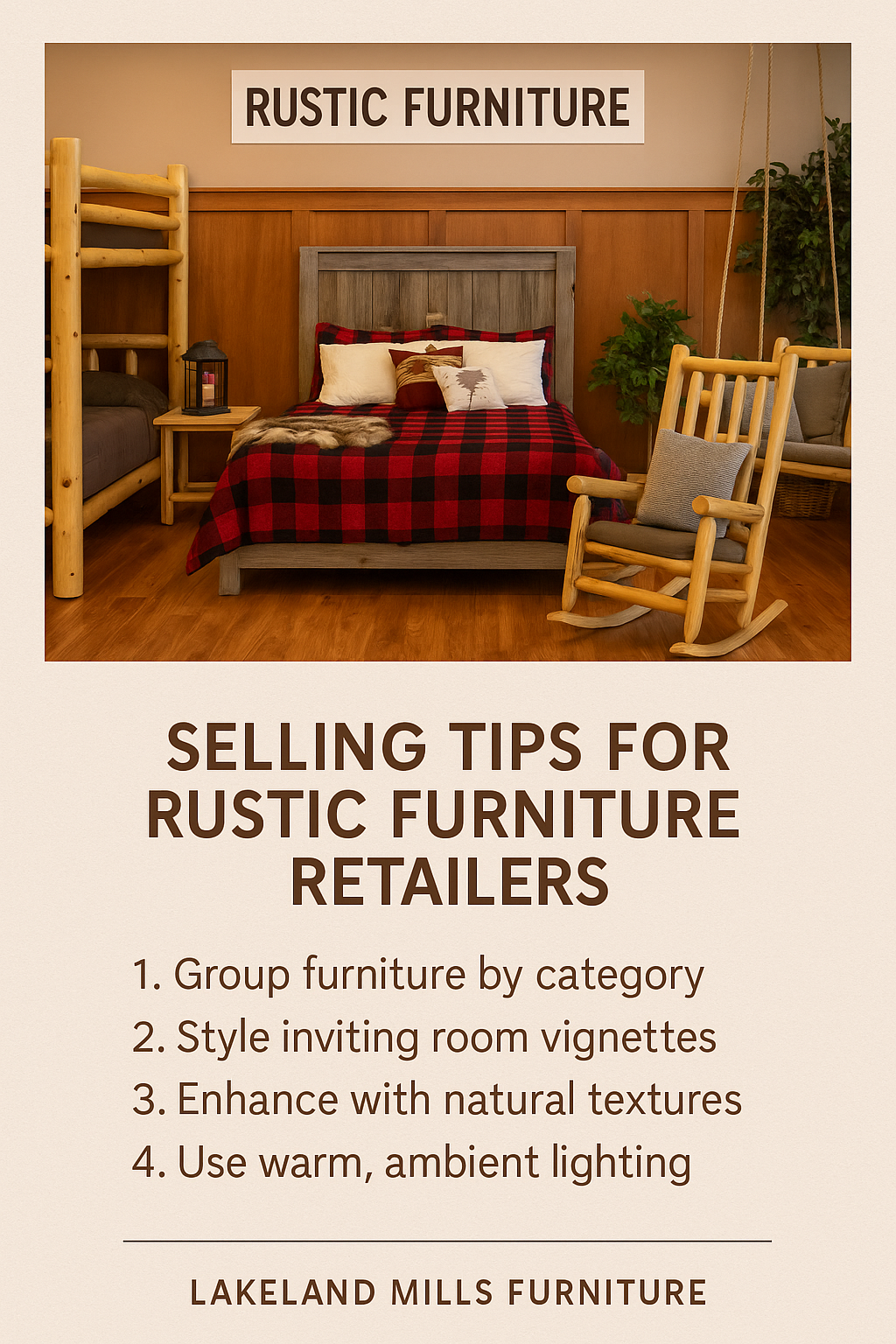
Great rustic furniture merchandising doesn't just fill a showroom floor — it tells a story. And stories sell. Whether you're a brick-and-mortar retailer, a specialty cabin décor shop, or a garden center looking to expand your offering, the way you display rustic furniture can mean the difference between a casual glance and a ringing register. Let's dig into the display strategies that actually work.
Why Rustic Furniture Merchandising Matters More Than Ever
Today's shoppers aren't just buying furniture. They're buying a feeling. A vision of their family gathered on the porch. Kids climbing into a solid log bunk bed at the cabin. A lazy Sunday afternoon on a cedar yard swing with a cold glass of lemonade.
Your job as a retailer? Make that vision impossible to resist.
Strategic merchandising does the heavy lifting for you. When it's done well, it:
- Boosts dwell time — customers linger longer when a display draws them in.
- Creates emotional connection — people buy what they can picture in their own lives.
- Elevates perceived value — real wood, real craftsmanship deserves a real presentation.
- Drives cross-selling — a well-styled vignette sells three pieces instead of one.
Rustic furniture already has warmth and character built right into the grain. Your display just needs to let that character shine.
5 Display Strategies to Boost Rustic Furniture Sales
1. Create Lifestyle Vignettes That Customers Can Step Into
Stop thinking in terms of individual products. Start thinking in scenes.
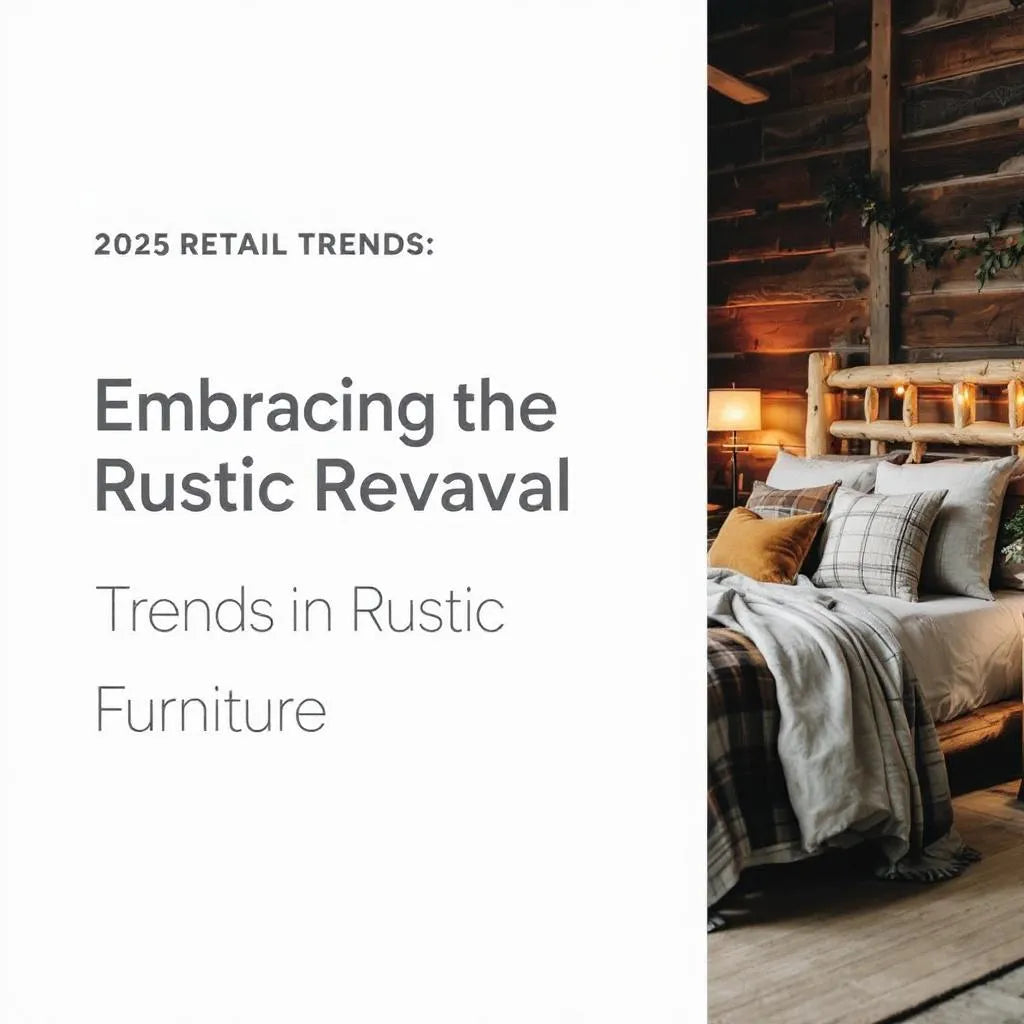
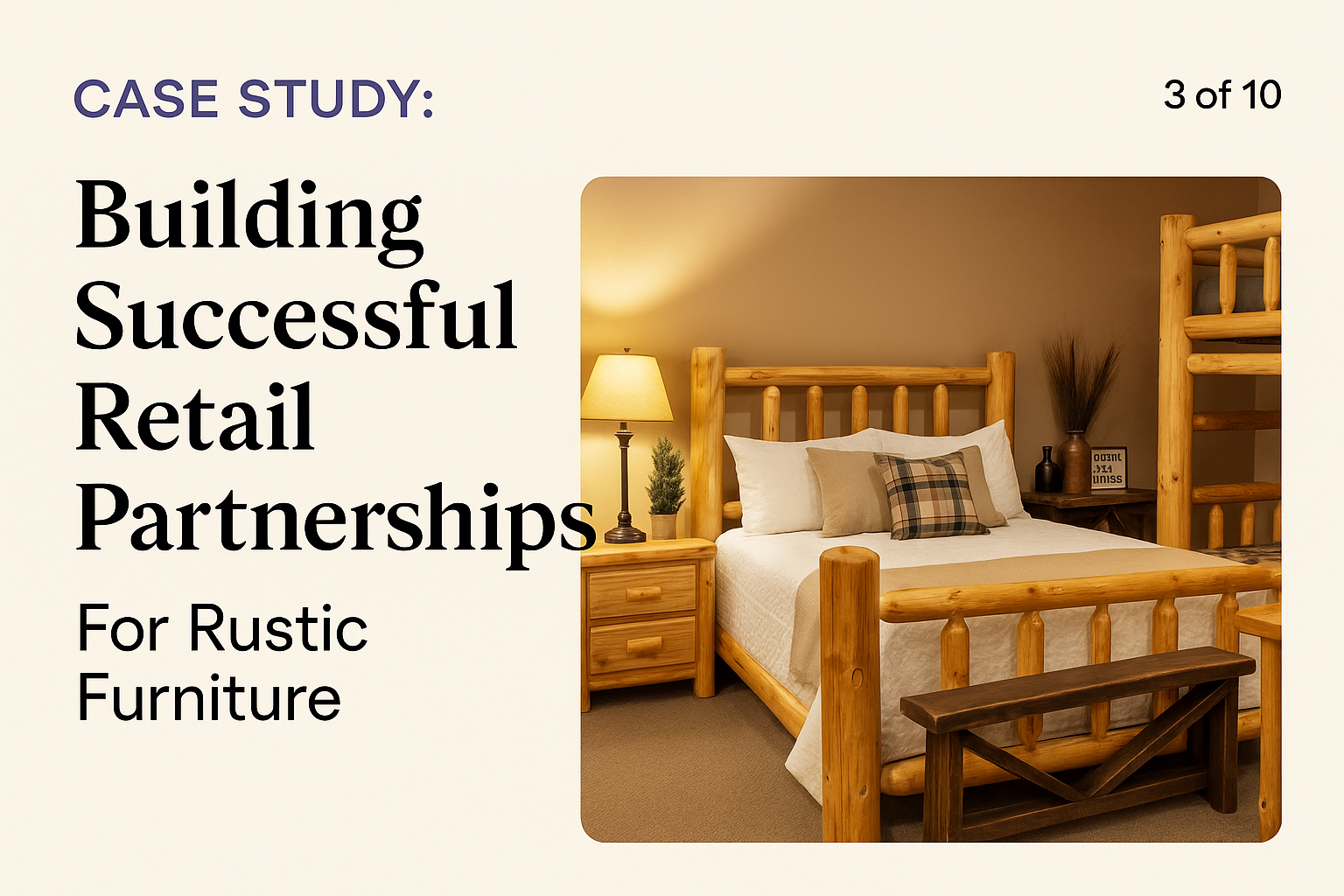
Group furniture into mini room-like settings that feel lived in. Pair a log bed with flannel bedding, a wool throw, and a lantern on a rustic side table. Set up a porch scene with a cedar garden yard swing flanked by potted ferns and a small cedar square table holding a pitcher of wildflowers.
The goal is simple: let shoppers physically step into the lifestyle. When they can see themselves there, they're already halfway to the checkout.
2. Lean Into Natural Materials and Textures
Rustic furniture is honest. It's real wood with real grain, made by real people. Your display should celebrate that authenticity — not compete with it.
Surround your pieces with complementary natural textures. Think jute rugs beneath a log dining set. Leather pillows on a cedar bench. Woven baskets tucked beside a barn wood bed frame. Stone accents and dried botanicals on nearby shelves.
Avoid anything too glossy, too plastic, or too polished. The charm of rustic furniture is that it feels grounded and genuine. Your staging should too.
3. Rotate Displays with Seasonal Rustic Furniture Themes
Seasonality is one of your most powerful merchandising tools — and one of the most underused.
In spring and summer, bring outdoor living front and center. Feature a 5-foot American garden swing in a garden-party vignette with string lights, mason jar candles, and linen throws. Stage porch rockers near a harvest scene when fall rolls around — pumpkins, warm-toned plaid blankets, and a crate of apples.
Come winter, dress a rustic bunk bed in thick cabin-style bedding with snowflake garlands and pine boughs overhead. Rotate quarterly at minimum. Fresh displays give repeat visitors a reason to stop and look again.
4. Play with Height, Layers, and Sight Lines
A flat display is a forgettable display. Use vertical space to create visual interest that pulls customers deeper into your store.
Elevate smaller pieces like side tables or plant stands on wooden crates or tree stumps. Hang Edison bulb lighting, wreaths, or hand-lettered signs overhead. Stack firewood or vintage suitcases nearby. Layer blankets over chair arms and lean framed art against walls.
The idea is to create depth. When a customer's eye has somewhere to travel — up, down, across — they spend more time in that space. And more time means more sales.
5. Educate with Simple, Story-Driven Signage
Here's a tip that costs almost nothing and pays for itself many times over: add small signs that tell the story behind the furniture.
A simple card that reads "Crafted in the USA from sustainably sourced Northern White Cedar" does more than inform — it connects. It gives the customer a reason to care. It separates your offering from the mass-produced imports they scrolled past online this morning.
Pair facts with feeling. "Built to last through every family gathering, every lazy Saturday, every starlit evening on the porch." That's the kind of signage that moves product.
Putting It All Together: Imagine the Possibilities
Picture this: a beautifully curated corner of your showroom featuring a Lakeland Mills log bed dressed in cozy flannel, vintage lanterns on each side, a faux pine tree in the corner, and a framed trail map on the wall. A customer walks in, pauses, and smiles. They're not looking at furniture anymore. They're standing in their dream cabin.
Now take that experience further. Feature the display on your social media. Encourage customers to share photos of their own rustic setups using a branded hashtag. Partner with local influencers who love cabin life, outdoor entertaining, or farmhouse style. Send a targeted email campaign showcasing your seasonal vignette with direct links to the featured pieces.
When you combine compelling in-store merchandising with smart digital outreach, you don't just sell furniture — you build a community of customers who keep coming back.
Rustic Furniture Merchandising: The Bottom Line
Merchandising isn't about making your store look pretty. It's about giving your customers a vision — a clear, tangible picture of how solid, USA-made rustic furniture fits into the life they're building for their family.
Every log bed, every cedar garden swing, every handcrafted table has a story. Your displays are where those stories come to life. Tell them well, and the sales will follow.
Ready to stock your showroom with furniture that practically sells itself? Explore the full Lakeland Mills collection and see why retailers across the country trust us as their go-to rustic furniture partner.

Leave a comment
This site is protected by hCaptcha and the hCaptcha Privacy Policy and Terms of Service apply.