
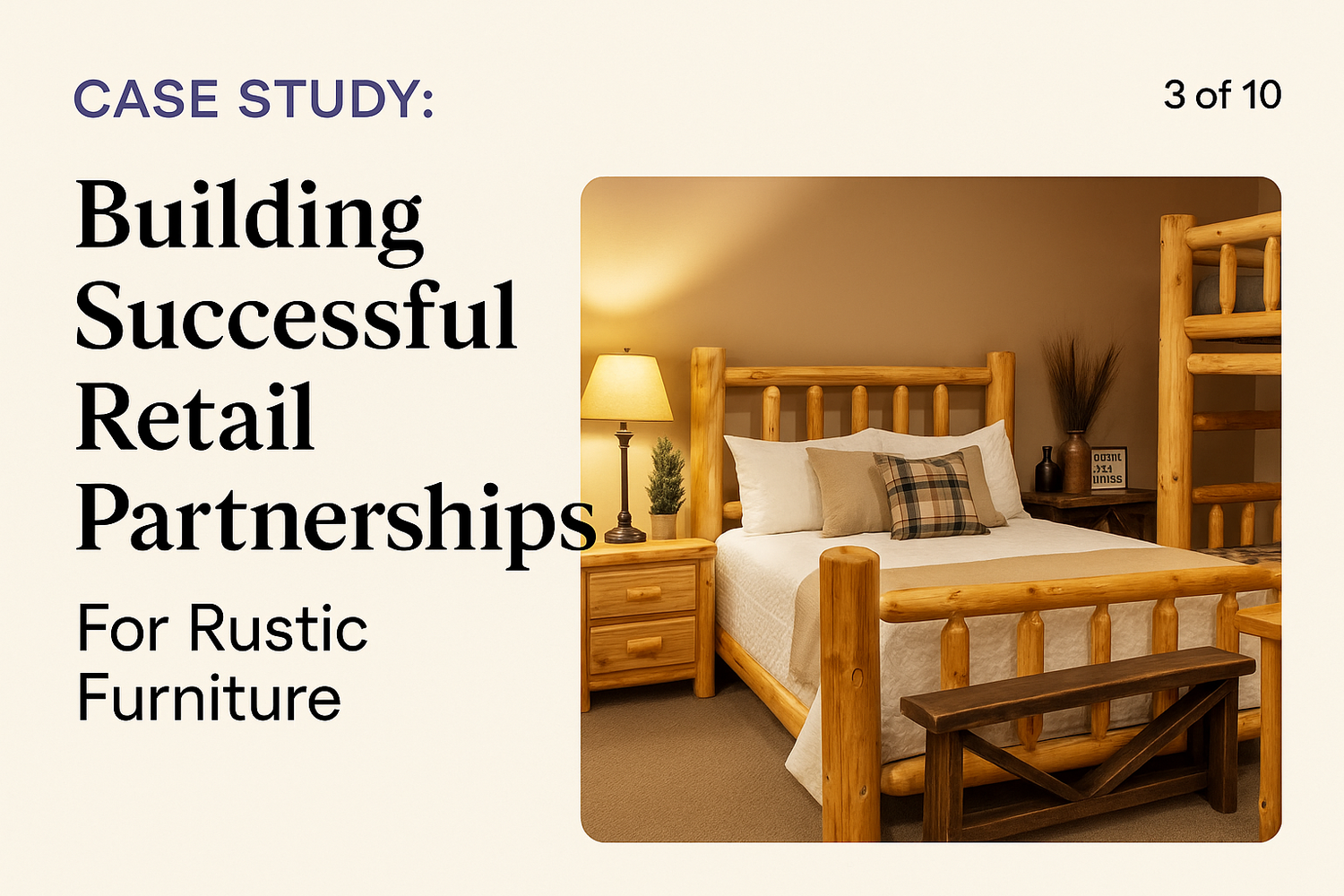
Your sales team is your most powerful tool when it comes to selling rustic furniture. Not your website. Not your signage. Your people. When a customer walks into your store and runs their hand along a hand-peeled log bed or sits down in a solid cedar rocker, it's a real human being—not a product tag—who seals the deal. The question is: does your staff know how to tell the story behind the piece they're standing next to?
Rustic furniture sales training isn't about memorizing specs or rehearsing pitches. It's about equipping your team with knowledge, confidence, and genuine enthusiasm for what they're selling. Let's break down exactly how to do that.
Why Rustic Furniture Sales Training Matters More Than You Think
Here's the reality. Rustic log and barn wood furniture isn't a commodity. Nobody walks in and grabs a log bunk bed off the shelf like a gallon of milk. These are considered purchases. Customers have questions. They have hesitations. And they're looking for someone who can speak to the quality, the materials, and the lifestyle these pieces represent.
A well-trained sales associate can:
- Build genuine trust within minutes of a conversation
- Overcome objections with confidence instead of awkward silence
- Increase the average order size through smart, natural suggestions
- Create a memorable shopping experience customers talk about afterward
When your team understands what makes each piece special, they stop being order-takers and start being storytellers. That's where the magic happens.
Teach the Craftsmanship Story First
Before your staff can sell a single piece, they need to understand how it's made. This is the foundation of everything else.
Train your team to speak naturally about materials and construction. For example: "This log swing is built from Northern White Cedar—naturally rot-resistant, insect-resistant, and crafted by skilled woodworkers right here in the USA." That's not a sales pitch. That's a story worth hearing.
When associates can walk a customer through the journey from raw timber to finished furniture, something clicks. The price tag suddenly makes sense. The piece stops being "expensive" and becomes "worth it."
Connect the Furniture to a Feeling
Facts matter, but feelings close the sale. Your staff should be trained to paint a picture—not just describe a product.
A barn wood bed isn't just a bed. It's the centerpiece of a mountain retreat. A porch rocker isn't just a chair. It's Saturday mornings with coffee, watching the fog lift off the lake. A rustic bunk bed isn't just for the kids' room. It's where cousins pile in during summer visits and whisper until midnight.
Help your team link every piece to the lifestyle your customers are already dreaming about. Coziness. Escape. The cabin life. Real, honest, solid living.
Overcoming Common Customer Objections
Every retail staff member has heard these questions. The difference between a trained team and an untrained one is how they respond.
"Is It Durable Enough for Kids?"
Absolutely. Solid wood construction means these pieces handle the wear and tear of real family life. No particle board. No flimsy joints. Just honest wood that gets stronger and more beautiful with age.
"How Do I Care for Wood Furniture?"
Simple. A damp cloth for everyday cleaning and a quality wood sealant once a year for outdoor pieces. Natural wood is low-maintenance by nature—especially Northern White Cedar, which resists decay without chemical treatment.
"Why Does It Cost More Than What I See Online?"
Because you're buying furniture that's handcrafted in America from real, solid wood. It's not assembled from a flat box. It's built to be passed down. Train your staff to say this with pride, not apology.
Cross-Selling: The Art of the Natural Suggestion
This is where rustic furniture sales training really pays off in dollars. A customer who's already committed to a rustic bunk bed for the cabin is the perfect person to hear about a matching nightstand for the bedside. Someone furnishing a master bedroom with a log bed frame? They might love the look of a rough sawn nightstand to complete the space.
The key is making the suggestion feel helpful, not pushy. "A lot of our cabin customers grab one of these three-drawer nightstands to go with the bed—gives you storage without breaking the rustic look." That's not selling. That's serving.
Train your team to think in room sets. Porch furniture bundles. Kids' room packages. When the suggestion feels natural, customers thank you for it instead of resisting it.
Highlight the USA-Made Difference
Never underestimate how much your customers care about buying American-made furniture. This isn't a minor detail—it's a major selling point.
When your staff can confidently say, "Every piece in this collection is built by American craftsmen using domestically sourced wood," it resonates. Customers care about supporting American jobs. They care about knowing their furniture wasn't mass-produced overseas. And they care about the superior quality that comes with real craftsmanship.
Make this part of every conversation, not an afterthought. It's one of the strongest stories your team can tell.
Build a Training Program That Sticks
Here's a practical idea that works: implement a quarterly "Rustic Roots" workshop for your sales staff. Each session should include:
- Product deep-dives: Pick three to five pieces and learn everything—materials, construction, best customer fit
- Catalog walkthroughs: Tour the full Lakeland Mills collection so staff can speak to the breadth of what's available
- Role-play scenarios: Practice handling objections, cross-selling, and storytelling in low-pressure settings
- Customer feedback review: Read actual reviews together and identify what customers value most
Retailers who commit to this kind of ongoing training see measurable results. Sales numbers go up. Return rates go down. And those glowing customer reviews—the ones that mention your "incredibly knowledgeable staff"—start rolling in.
Turn Your Team Into Storytellers
At the end of the day, the best rustic furniture sales teams aren't the ones with the slickest scripts. They're the ones who genuinely believe in what they're selling. They know the wood. They know the craftsmanship. They know the feeling a customer is chasing when they walk through the door.
Equip your staff with that knowledge, and they won't just move furniture off the floor. They'll build relationships, earn referrals, and turn your store into the place people trust for real, solid, handcrafted furniture.
Ready to stock your floor with pieces that practically sell themselves? Explore the full Canterbury Pine collection and the rest of our USA-made rustic furniture line at Lakeland Mills. Your team—and your customers—will thank you.

Leave a comment
This site is protected by hCaptcha and the hCaptcha Privacy Policy and Terms of Service apply.